Projects › Industry · aerodynamic testing
Drone Wind-Tunnel Testing — Aerotargets
A summer of wind-tunnel studies on a scaled drone, on a test rig I built.
- My role
- Mechanical Engineering Intern
- When
- May – Aug 2024
- Where
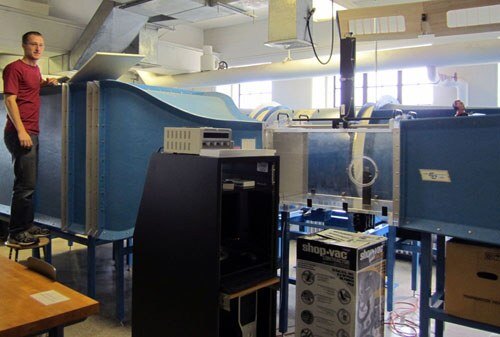
- Aerotargets International (Kingston, PA) · tests run in the Lehigh wind tunnel
- Tools
- SolidWorks · six-axis force sensor · NI DAQ · LabVIEW · MATLAB
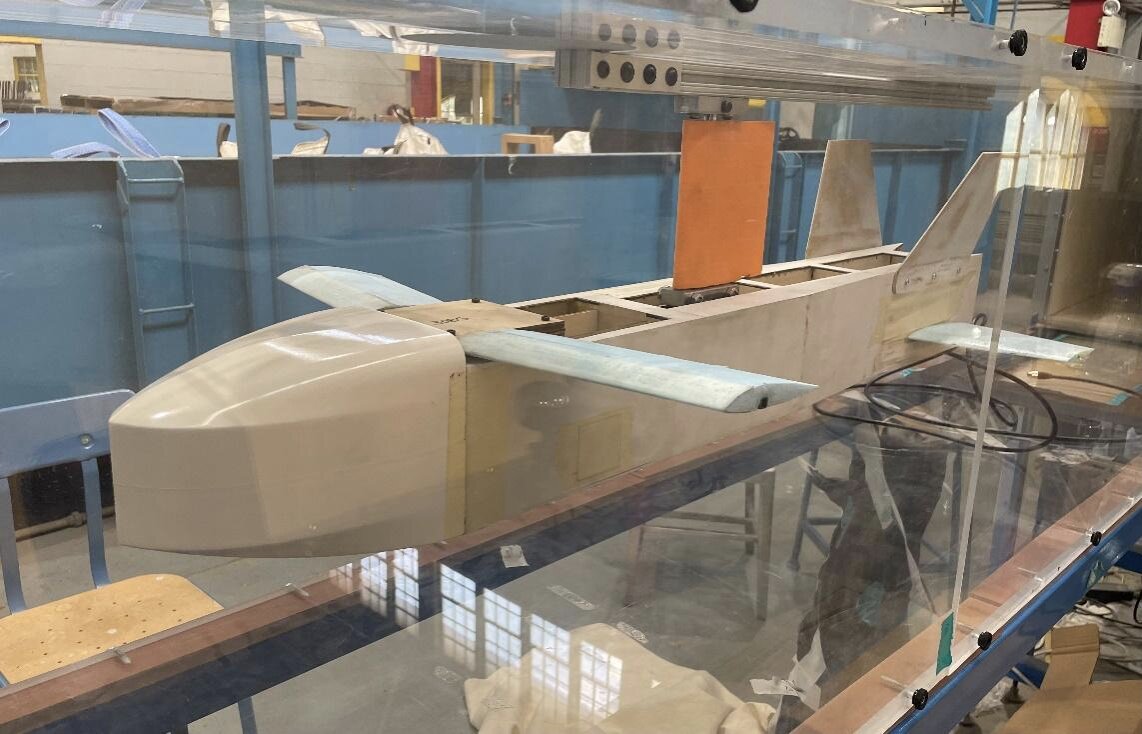
Aerotargets builds target drones for training, and they wanted real numbers on how their airframe performs before changing the design. Our lab ran a three-phase wind-tunnel program for them; I worked on the largest-scale phase — a one-third-scale fuselage model tested with its panels on and off at speeds up to 84 mph.
What I did
- Scaled and modified the model in SolidWorks to fit the tunnel and the force sensor, and designed the fixture that holds it — with a four-bar linkage so the test angle can be changed without re-rigging the whole setup.
- Mounted the model on a six-axis force sensor behind a streamlined fairing and ran the speed sweeps, logging the data through NI DAQ and LabVIEW.
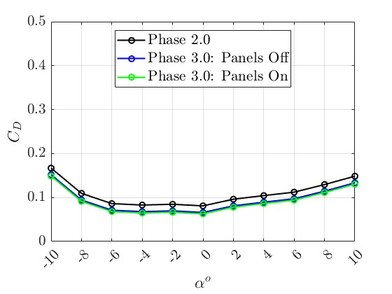
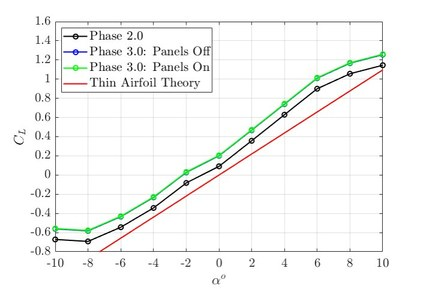
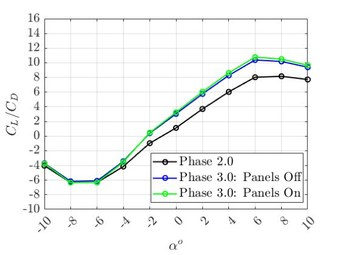
- Processed the forces in MATLAB, corrected for the shortened wings, and checked the setup against theory: the measured lift matched the published wing data within a few percent.

How it turned out
We ran every kind of study the tunnel allowed — speed sweeps, angle-of-attack sweeps, panels on and off, and comparisons with the published wing data — on the rig I designed and built for the model. All of it went into a report for Aerotargets’ engineers.