Projects › Experimental fluids · robotics
Swimming in a Wake — Harvard Lauder Lab
Why does a fish behind another fish swim for free?
- My role
- Research Intern, Office of Naval Research MURI program
- When
- May – Aug 2026
- Where
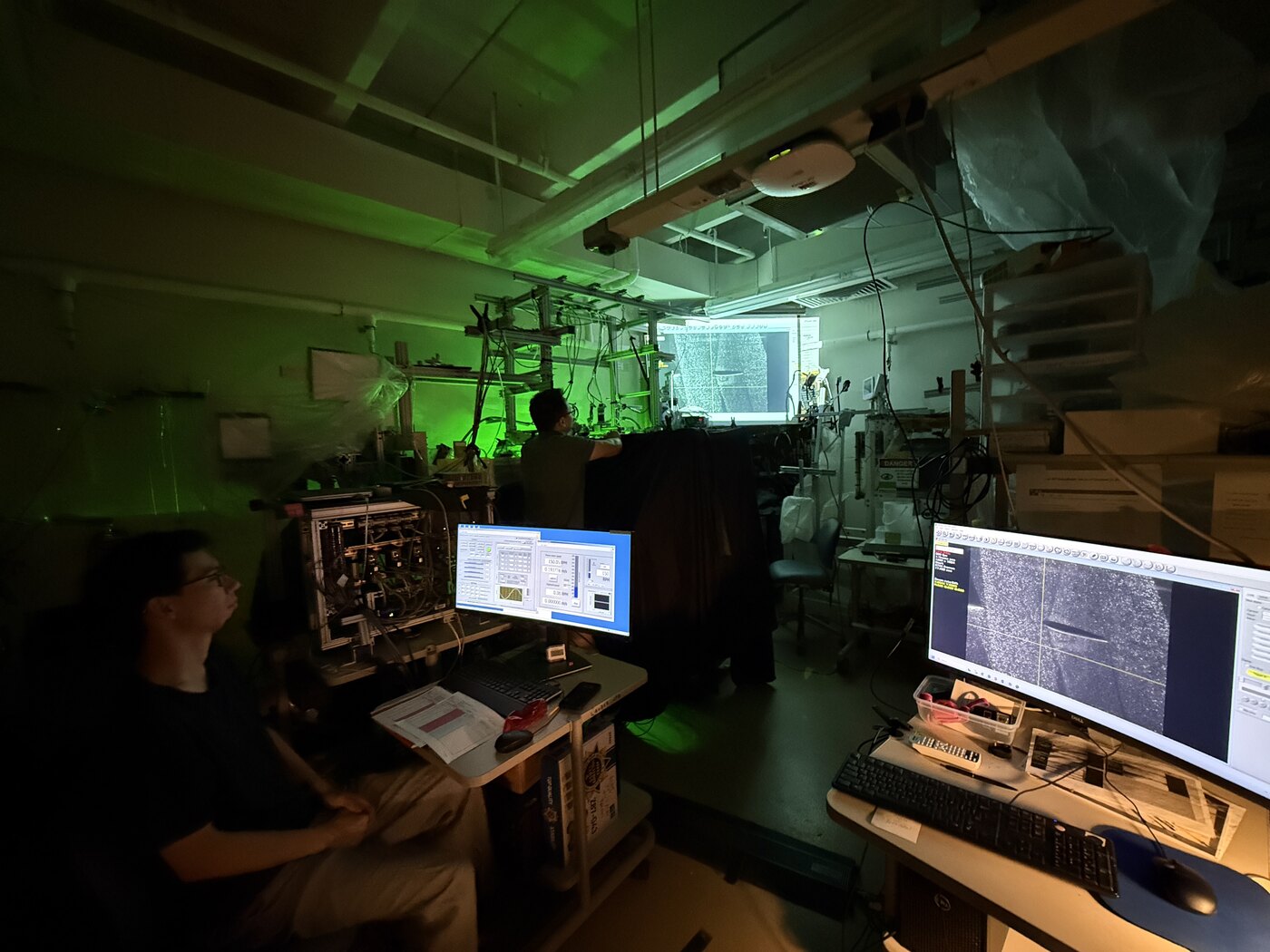
- Lauder Laboratory, Harvard University · Prof. George Lauder
- Tools
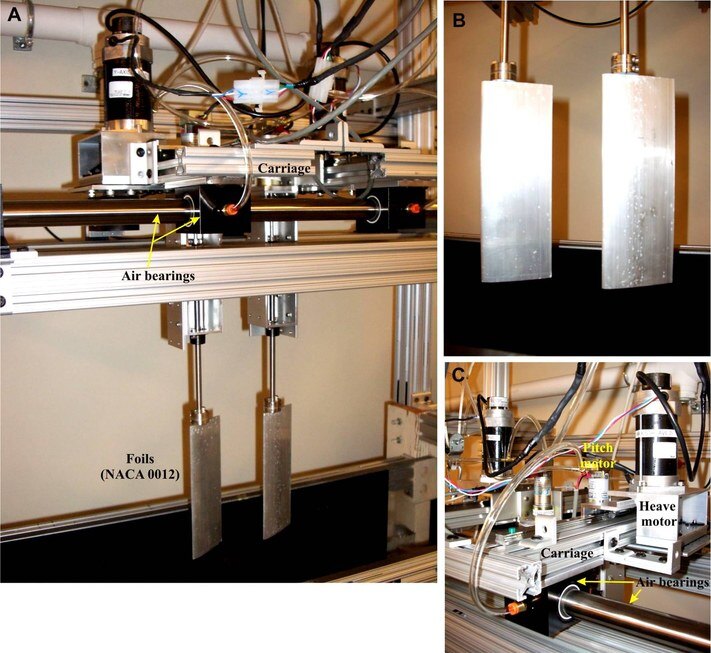
- Air-bearing robotic flapper · LabVIEW · NI DAQ · PIV flow imaging (MATLAB, PIVlab) · motion tracking in MATLAB and R
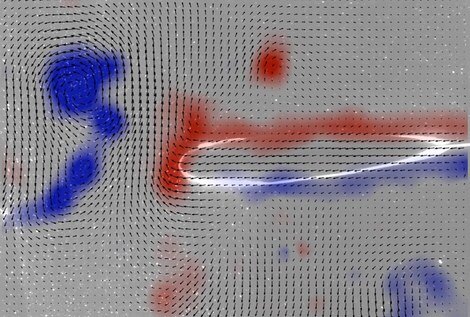
Fish in schools save energy by riding the wakes of the fish ahead of them. If we understand exactly how, ships and underwater drones travelling in groups could do the same. At Harvard I worked on the simplest version of the question: a robotic flapper makes a wake, a passive fish-shaped body sits behind it — when does the follower get pushed forward without swimming at all?
What I did
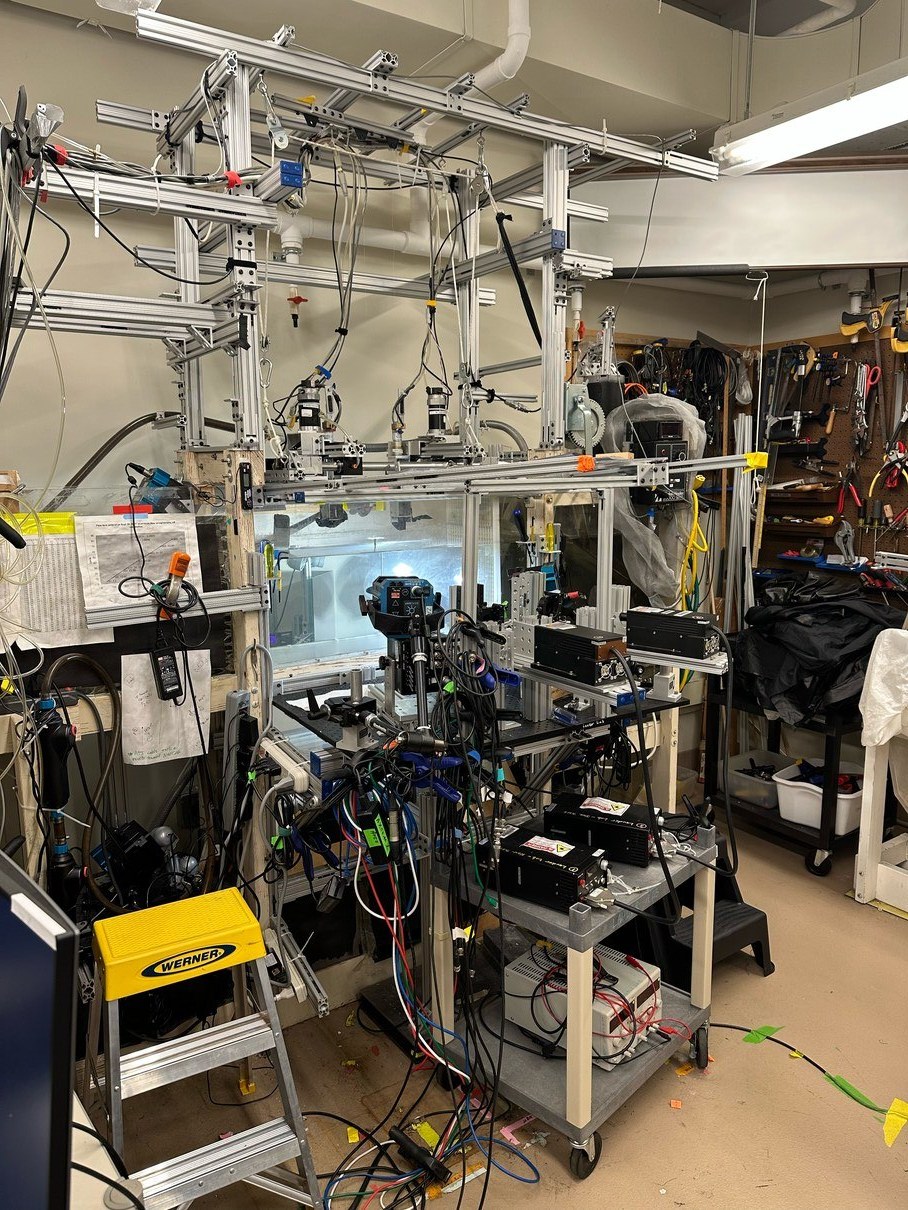
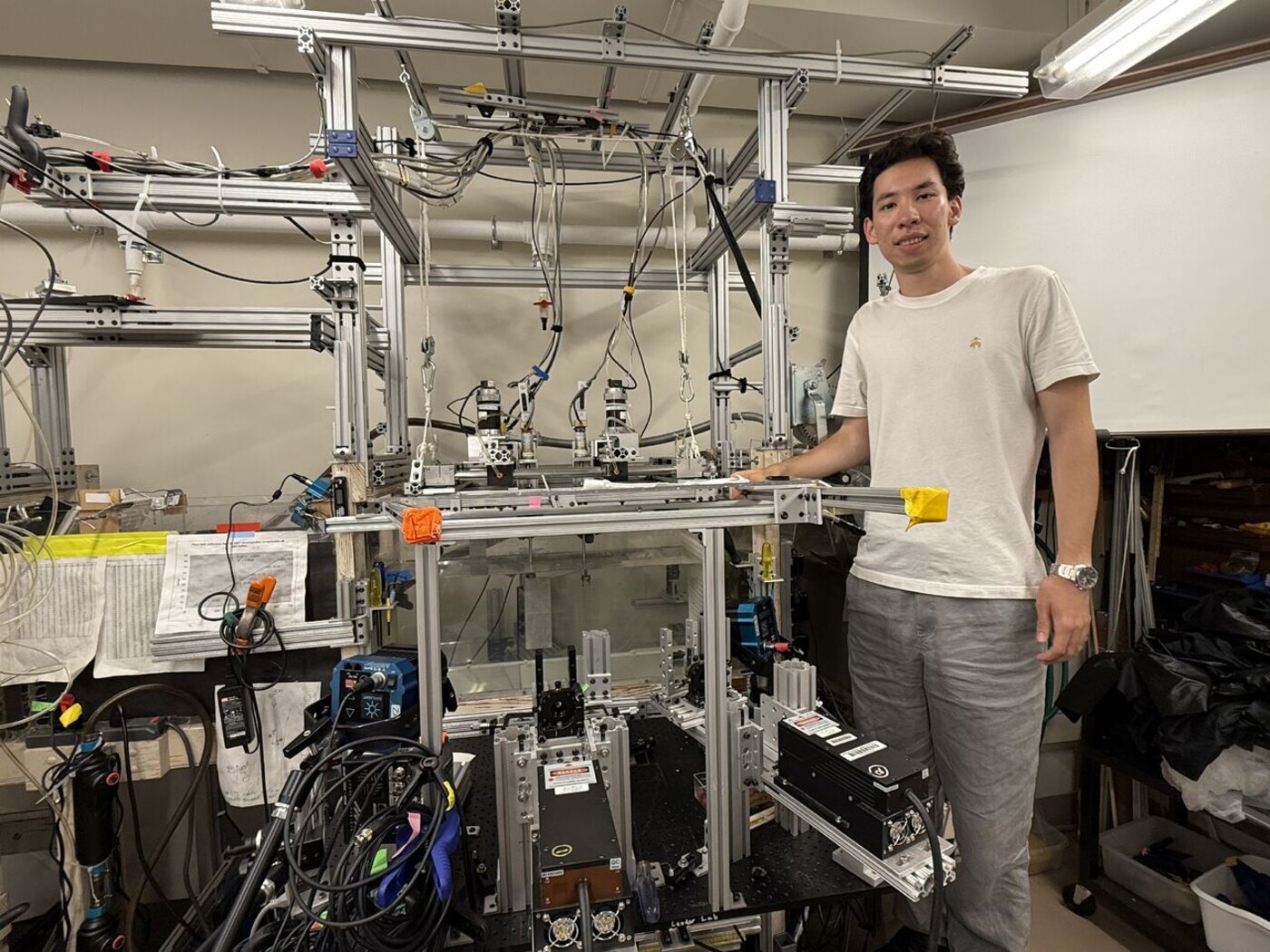
- Ran the lab’s air-bearing robotic swimmer — it floats on a cushion of air, so even tiny forces show up as motion — and planned a test matrix over flapping frequency, amplitude and flow speed instead of changing one setting at a time.
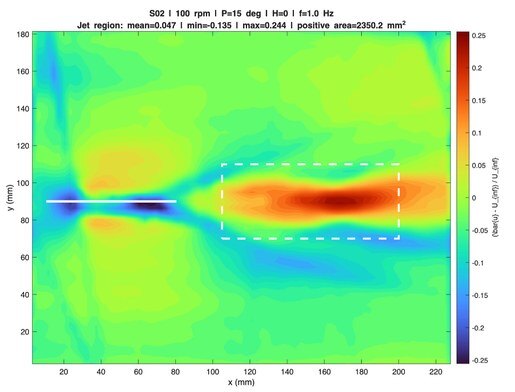
- Mapped the flow with particle image velocimetry (PIV): a laser sheet lights up particles in the water and a camera tracks them, which shows the vortices the leader leaves behind and how they hit the follower.
- Built the tracking pipelines in MATLAB and R that turn the video into numbers, and wrote the technical report at the end of the summer.
How it turned out
Two things came out of the summer. First, a sweet spot: the combinations of flapping frequency, amplitude and spacing where a trailing body gets a real push from the wake — settings the robotic-fish experiments can now use directly. Second, the follower barely has to work for it: a passive fish settles into a stable position in the wake on its own, moving with the flow rather than fighting it, and still collects the benefit. I presented the results at the ONR program review in September 2026 and am presenting them at the APS Division of Fluid Dynamics meeting in November; a journal paper with the Harvard and Lehigh groups is in the works.