
Projects › Research · robotics
TunaBot Leader–Follower Experiments
Two robotic fish, one water channel.
- My role
- Undergraduate researcher — experiments and platform build
- When
- 2025 – present
- Where
- Unsteady Flow Interactions Lab, Lehigh University
- Tools
- Arduino · MATLAB/Simulink · NI DAQ · PIV flow imaging · air-bearing platform
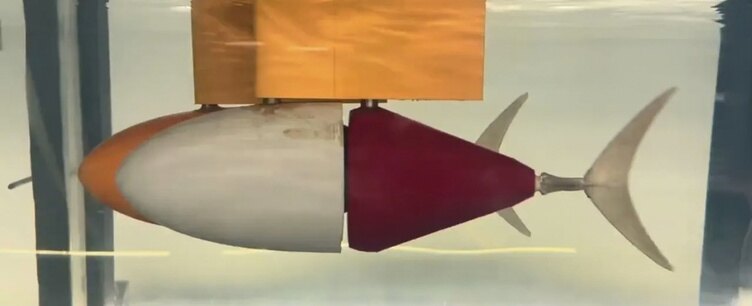
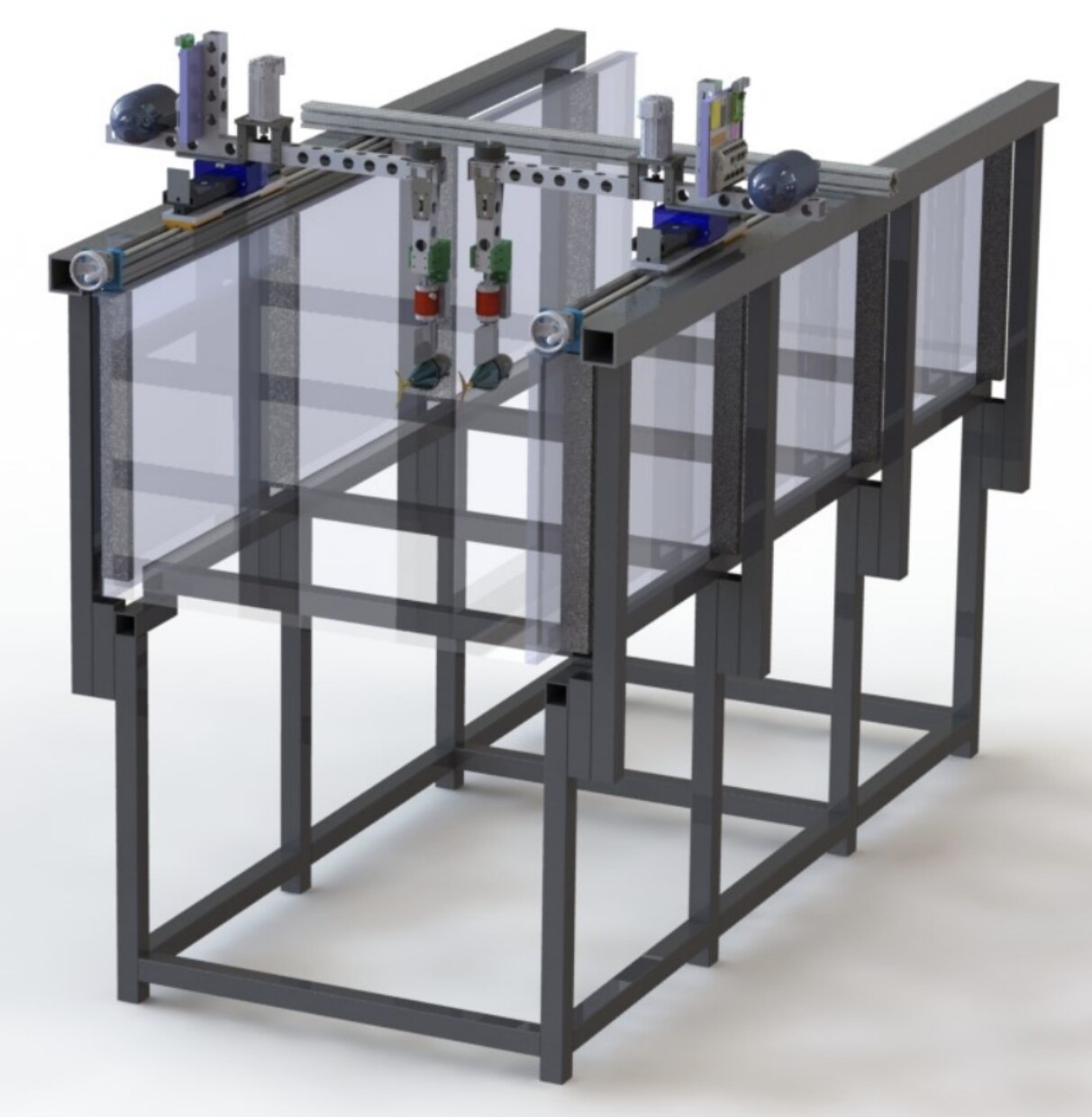
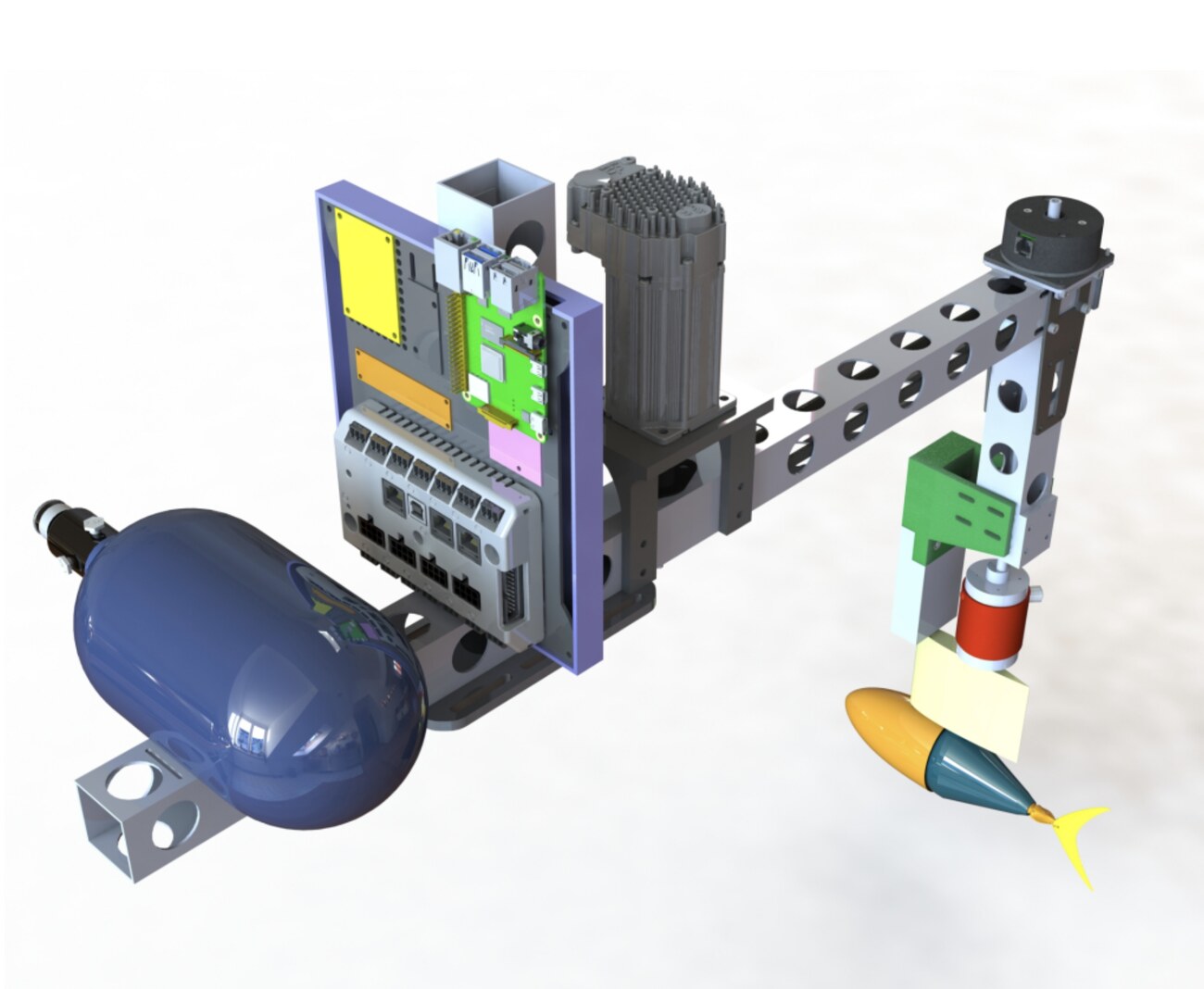
The lab’s two TunaBot robotic fish swim one behind the other in the water channel, each on its own carriage so we can set the spacing and the timing between their tail beats precisely. The carriages ride on air bearings, so there is no friction and each fish is free to move back and forth with the flow. It’s the actively swimming version of the question I worked on at Harvard: how does a follower use the wake of the fish in front? The spacings and timings we test are the sweet-spot settings that came out of the Harvard experiments.
What I did
- Ran both robots through Arduino with MATLAB/Simulink and an NI DAQ keeping the control and the measurements in sync, including trials with the tails beating in phase and out of phase.
- Captured the wake between the two fish with PIV and processed the flow fields in MATLAB.
- Helped build and calibrate the new wire-free air-bearing platform the carriages ride on — aligning the rails, cleaning the bearings, and dialing in the accuracy a nearly frictionless platform needs.

How it turned out
Wake flow fields between leader and follower at the Harvard sweet-spot settings and across the different timings, now with both fish actively swimming — all feeding the same Navy-funded research program as the Harvard work.